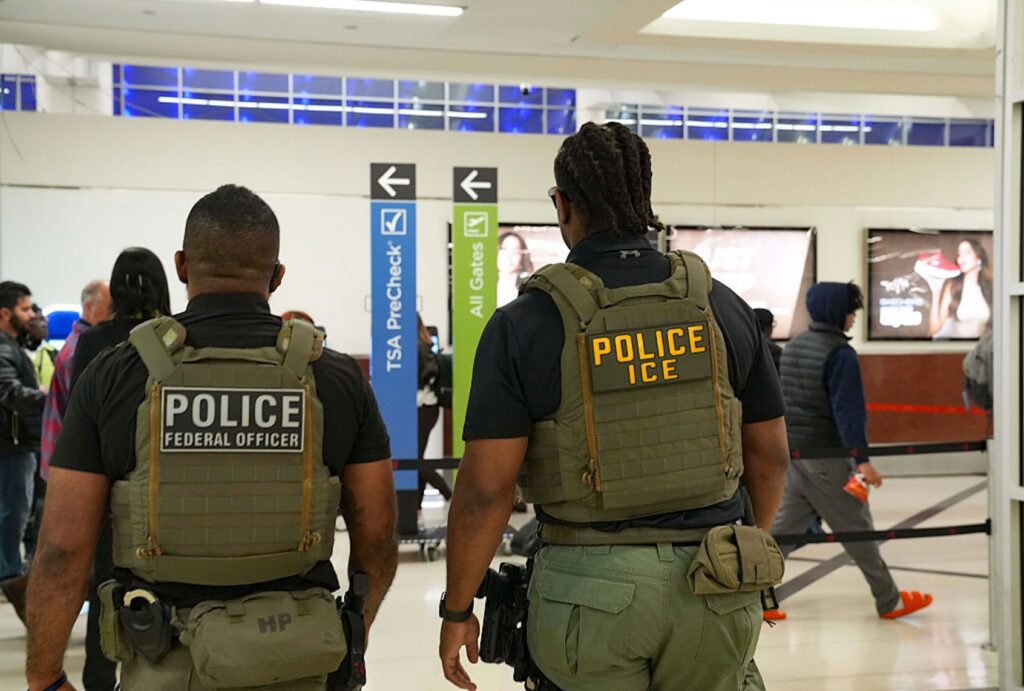
In recent years, the airport has become more and more of a dreaded scene; from long security lines that take hours, travelers missing their flights, and the recent news of Transportation Security Administration (TSA) officers calling out due to staffing shortages and funding uncertainty.
These staffing shortages have increased pressure on airport operations and raised concerns about how security and immigration checks are being managed.
In response to this crisis, the Trump administration has turned to deploy U.S. Immigration and Customs Enforcement (ICE) agents at airports to assist with security operations, crowd control, and managing long lines. Additionally, ICE agents will now play a major role in monitoring who can enter the country. This new presence of immigration enforcement at airports has become an important social justice issue involving immigrant rights and due process.
When travelers arrive in the United States, they must pass through immigration inspections where officers verify passports, visas, and travel documents. While many travelers move through the process quickly, some may be directed to secondary inspection for additional questioning.
During their secondary inspection, travelers may be asked more detailed questions about their travel history, employment, or the purpose of their visit.
These encounters have sparked a newer, broader discussion about immigrant rights and due process at ports of entry. Advocates have argued that situations such as language barriers and the stress of international travel can also make these encounters more difficult for some individuals.
Immigration attorneys from the American Immigration Lawyers Association (AILA) argue that assigning these ICE agents to airport security blurs the line between immigration enforcement and civil liberties protections because ICE is not trained for aviation security, and such deployments can undermine trust in public spaces.
Critics also worry that some travelers may experience additional scrutiny because of their nationality, religion, or ethnicity. However, on the other hand, supporters of this opposing argument emphasize that airport immigration checks are an essential part of protecting the United States’ borders to ensure that entry laws are being followed and national security is maintained.
Agencies such as U.S. Customs and Border Protection and U.S. Immigration and Customs Enforcement are responsible for inspecting travelers and ensuring that immigration laws are followed at ports of entry.
Policy researchers frequently study how immigration enforcement policies affect travelers and national security. For example, researchers at the National Immigration Law Center explain how these policies affect both international and domestic travelers, creating potential issues for those with pending immigration cases, older deportation orders, or those using alternate ID forms.
These findings contribute to ongoing debates about how immigration policies should balance national security with civil liberties.
Ultimately, the presence of immigration enforcement at airports around the world highlights the ongoing complex balance between national borders and civil liberties. Understanding how these policies affect travelers is an important step toward creating an immigration system that is both secure and fair.
These policies can have real consequences for immigrants, international students, and travelers who must navigate complicated legal systems when entering the country.
Leave a Reply